

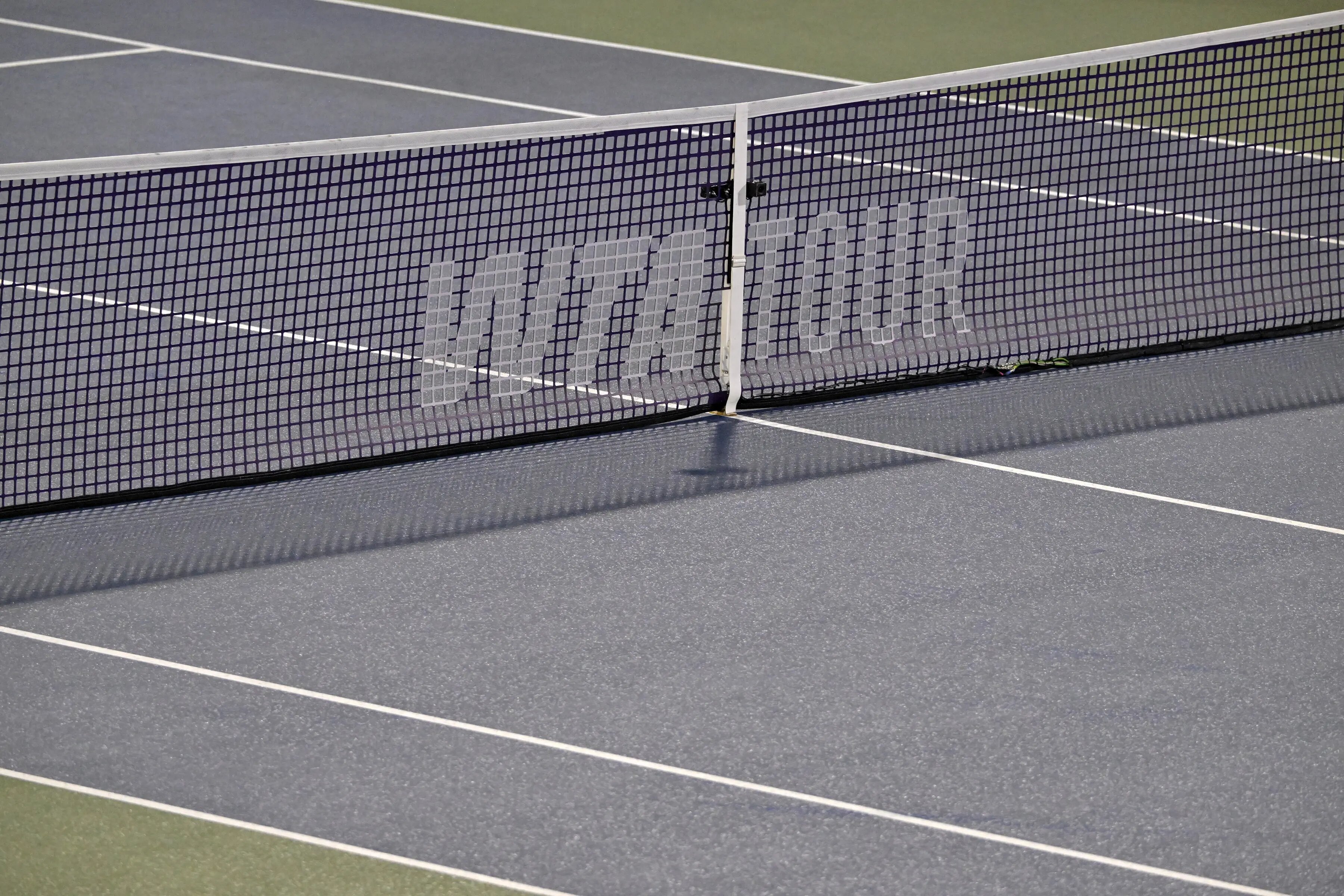
Imagine going to work, having a conversation with a colleague, perhaps saying something unflattering about another colleague, only to discover that your employer has been broadcasting the entire exchange to thousands of strangers on the internet. Now imagine that employer subsequently explaining that it had simply forgotten to tell you about the microphones.
Welcome to the WTA Finals. On Wednesday, private conversations between players and coaches during practice sessions at Indian Wells were broadcast on the WTA’s official YouTube channel, with several recordings subsequently circulating across social media.
The most prominent involved Jessica Pegula, who was overheard criticizing Mirra Andreeva’s behavior and describing the 19-year-old as a diva during a conversation with her coach, Mark Knowles. Another recording reportedly captured a tense exchange involving Elena Rybakina and her coach.
Predictably, the internet had a wonderful time dissecting every word, but then came the truly extraordinary part. The WTA admitted that it had never informed the players that their conversations could be heard. Not that somebody hacked its equipment or that an unauthorized person secretly recorded a conversation.
The WTA itself had installed microphones, broadcast the recordings, and apparently neglected the tiny detail of informing the people being recorded. Well, it would be truly difficult to devise a more spectacular failure of professional responsibility if the entire exercise had been organized by a committee specifically instructed to produce one.
This Wasn’t a Leak
Saying it so matters. The microphones were reportedly intended to capture the sounds of practice, allowing fans to enjoy a more immersive experience while watching their favourite players prepare for the season-ending championships. Okay, I guess.
Tennis fans enjoy watching practice sessions, and there is certainly nothing wrong with giving them greater access to the sport, but somewhere between deciding to broadcast the sound of tennis balls and actually switching on the microphones, the WTA apparently forgot that human beings also possess the ability to speak. And that those human beings might occasionally discuss things they would rather not share with the entire planet.
In its subsequent statement, the organization accepted full responsibility for failing to inform players and their teams that microphones were active. Great. The governing body of professional women’s tennis, an organization responsible for the interests of hundreds of athletes and the administration of a global sporting enterprise, has acknowledged that it failed to perform a task that would generally be considered fairly basic at a school production. Tell people when they are being recorded.
Pegula’s representative confirmed that the American had absolutely no idea her conversation was being livestreamed and that she has since contacted those involved to apologize.
Therein lies another rather unpleasant consequence. Pegula is now dealing with the personal fallout from remarks she never intended to make publicly. Andreeva and her coach, Conchita Martínez, have been dragged into an unnecessary controversy. The players are left explaining themselves, while the organization responsible for exposing the conversation issues a statement and removes the recordings. Pretty fair, right?
There is also something really troubling about the assumption that athletes surrender every reasonable expectation of privacy simply because somebody has decided their lives might generate interesting content. A practice court is not a press conference–nor should it be.

Jessica Pegula (USA) hits to Victoria Azarenka (not pictured) on day six of the 2025 U.S. Open tennis tournament at the USTA Billie Jean King National Tennis Center. Mandatory Credit: Robert Deutsch-Imagn Images
The WTA Has Been Warned About This Before
Perhaps the most infuriating aspect of the entire affair is that the warning signs were already there. Earlier this year, Coco Gauff complained after cameras at the Australian Open captured her smashing a racket in what she believed was a private area leading to Iga Swiatek questioning whether players were being treated like animals in a zoo.
Pegula herself criticized the increasingly intrusive presence of cameras in players’ areas, including instances of people examining athletes’ phones through broadcast footage. That controversy involved a Grand Slam organizer rather than the WTA directly, but the underlying concern was unmistakable.
Players were becoming uncomfortable with how much of their working lives was being turned into public entertainment but apparently, the lesson taken from that discussion was that cameras alone were insufficient. Let’s throw microphones into the mix.
All of this goes back to there being a broader problem in professional tennis, where the pursuit of supposedly authentic behind-the-scenes content is increasingly treated as justification for removing the distinction between professional and private life. Everything must be filmed and everything must be accessible and every emotional reaction becomes another opportunity to generate engagement.
And somewhere in this relentless enthusiasm for content, the athletes themselves become an afterthought. The solution is hardly complicated. Inform players clearly about recording arrangements. Establish areas where conversations cannot be broadcast. Ensure that audio equipment captures what it is actually intended to capture, and give players meaningful control over their participation. These are not revolutionary concepts.
They are the minimum precautions one would expect from an organization entrusted with protecting the people whose performances make its entire business possible. The WTA has now removed the recordings and announced that practice livestreams will continue without audio. A necessary correction, but it is also an admission that the safeguards should have existed before the first broadcast, rather than being introduced after the damage had been done.
The Last Word
The WTA deserves considerable criticism for this episode. It’s an extraordinary failure at the organization’s flagship event. Pegula’s remarks may have been unflattering. People are entitled to think so. But the much bigger story is that she had no reason to believe she was addressing the public. The WTA took that choice away from her. Removing the recordings is sensible and apologizing is necessary but neither reverses what happened.
For an organization supposedly representing professional athletes, protecting their privacy should not be an innovative new policy introduced after a scandal. It should be the starting point.
Main Photo Credit: Eric Bolte-Imagn Images
O que achou dessa notícia? Deixe um comentário abaixo e/ou compartilhe em suas redes sociais. Assim conseguiremos informar mais pessoas sobre o que acontece no mundo do tênis!
Convidamos você a clicar em Página de Parceiros para conhecer os parceiros do Tênis Portal e acessar seus sites.
Esta notícia foi originalmente publicada em: Fonte original