

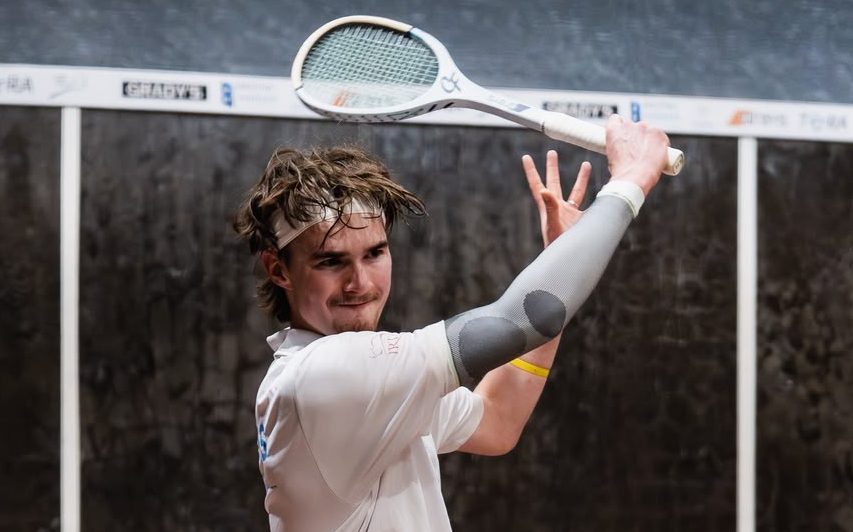
A select group of spectators enjoyed a flashback to the 1990s on Sunday, when a chap named Henman won a high-level tennis tournament.
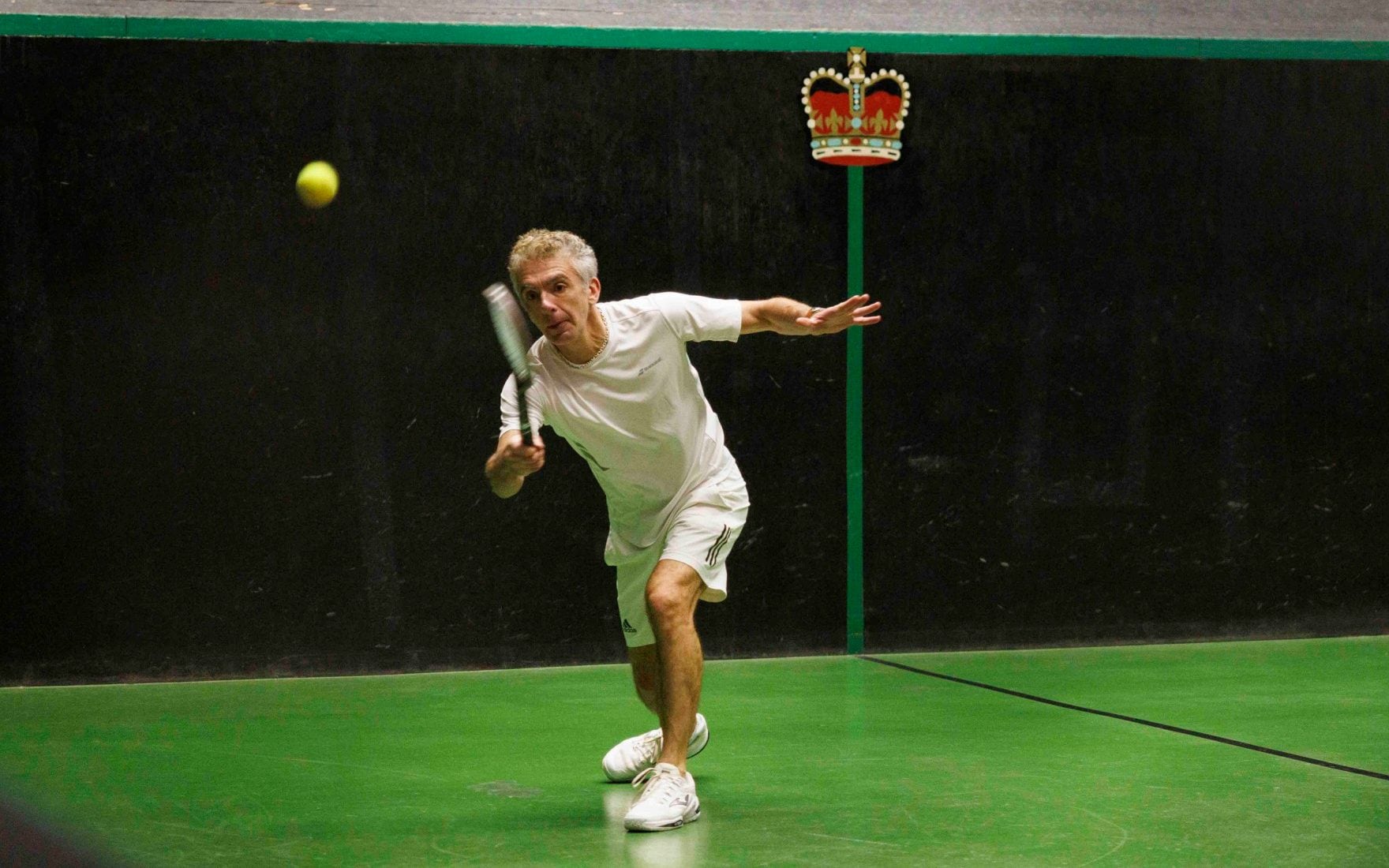
Admittedly, that last sentence requires a few asterisks. The champion in question was actually Henry Henman, Tim’s 20-year-old nephew. And Henman jnr was playing real tennis – the original version of the sport – as opposed to lawn tennis, its arriviste 19th-century descendant.
Competing in the final of Cambridge’s Eastern Open, Henman defeated Vaughan Hamilton by a dominant 6-0, 6-4 scoreline, and so adding another cubit to the growing theory that he could be a world champion in the making.
Like his uncle, Henman started out as an all-round athlete good enough to play cricket, hockey and lawn tennis for Oxfordshire in his teens. The difference, though, is that his heart was always in real tennis – a niche sport, perhaps, but a highly romantic one. Rather than going to university, he chose a job as the assistant professional at Oratory School, where his boss is 13-time world champion Rob Fahey.
“I much prefer real tennis,” Henry Henman told Telegraph Sport. “There’s a lot more to it. No two rallies are the same, which is part of the beauty of the game, and then there’s all the enriching history. Plus, on a personal note, it’s fun to create my own path.
“I played quite a lot of lawn tennis up till the age of 13 or 14, and participated in a few regional and national tournaments,” Henman added, “but competing with the six letters that make up my surname is quite hard for a young kid.”
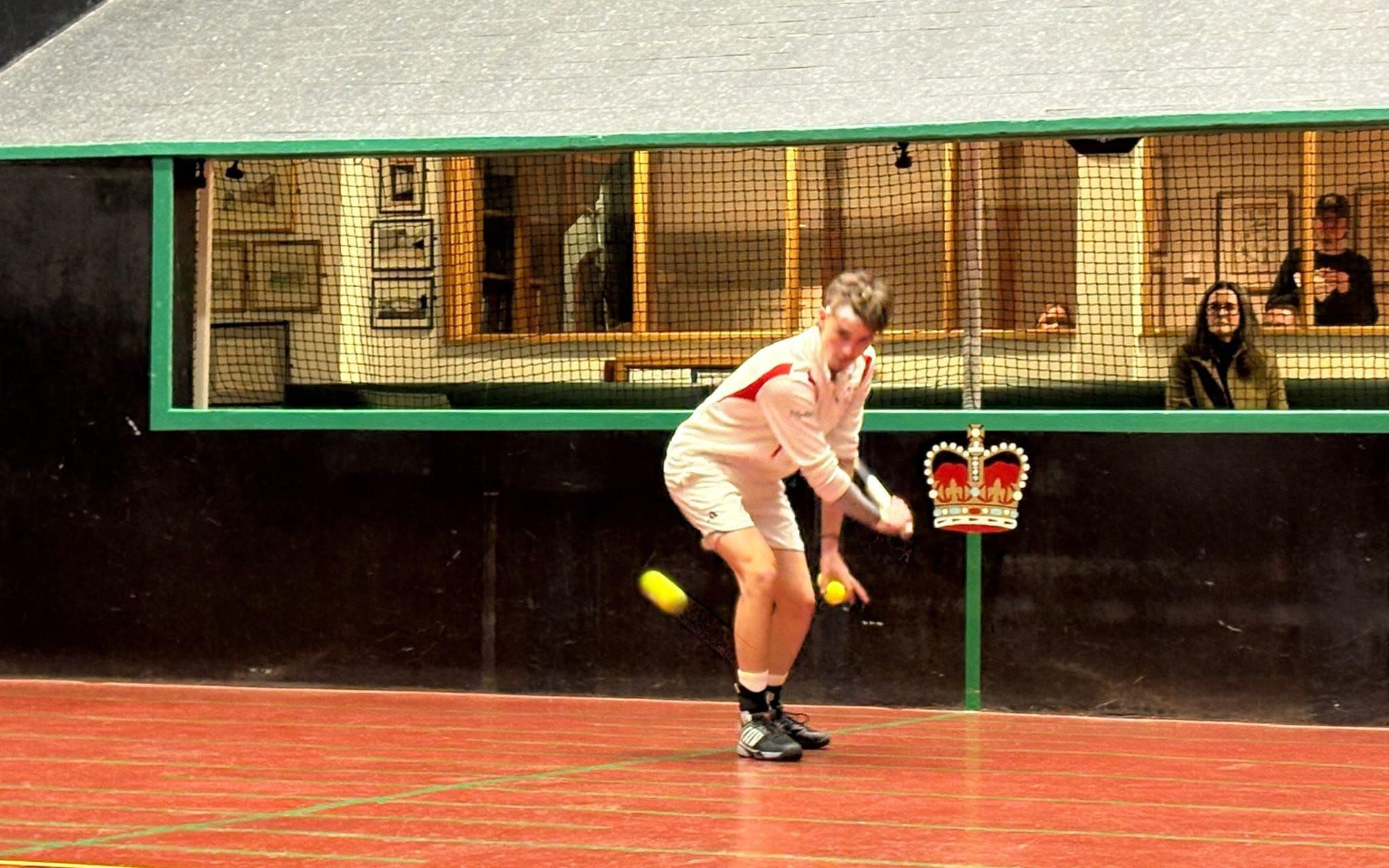
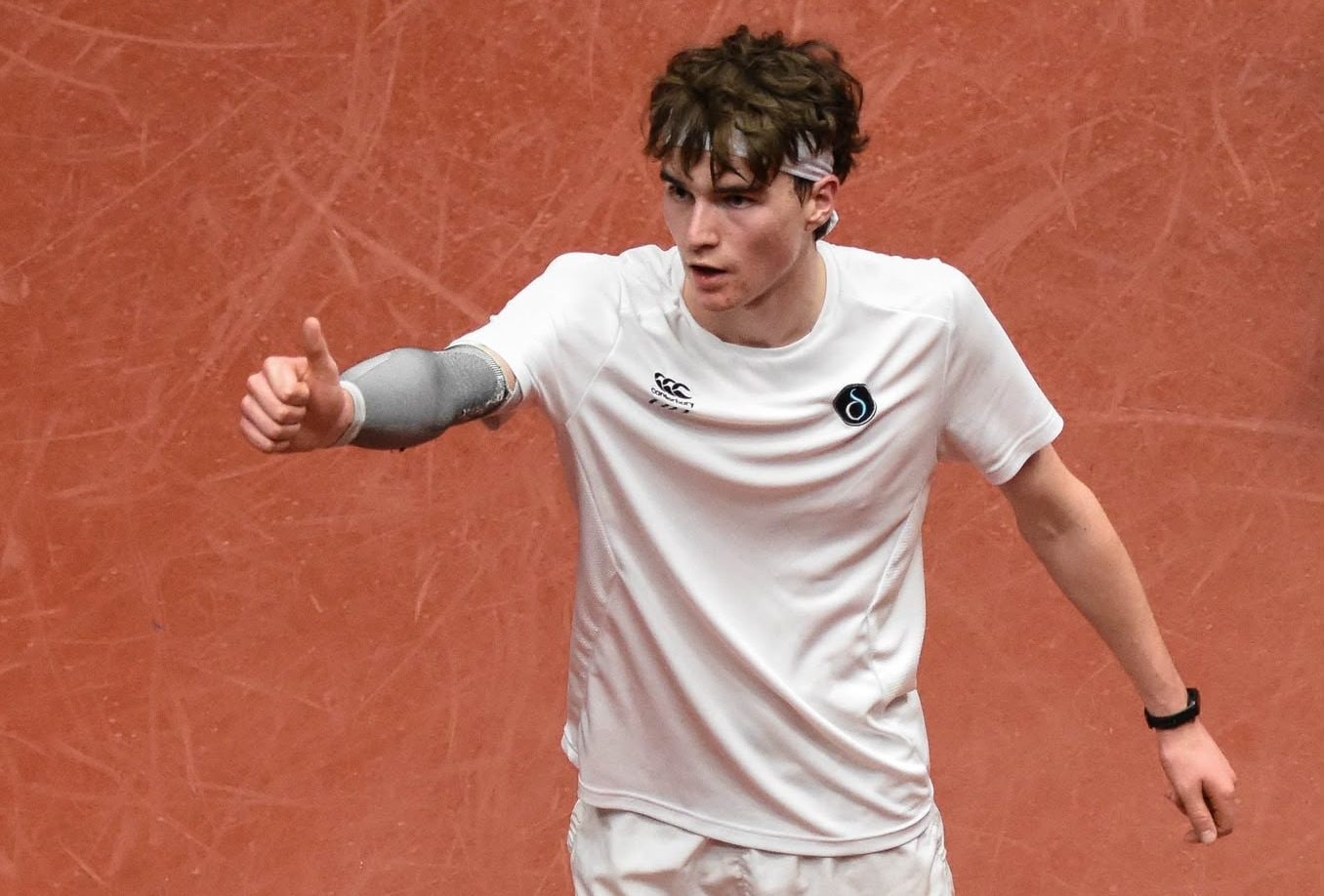
Apart from the baggage that comes with a sporting dynasty, the other drawback of being a real-tennis phenom is that you constantly have to explain what your little-known sport is all about – whether that is to customs officials peering through your racket bag, or to baffled contemporaries at a house party.
Henman usually describes real tennis as an intermingling of lawn tennis, squash and chess. And this is indeed a sport of Byzantine complexity, requiring the exercise of brains as well as brawn.
Every two years, the reigning king of real tennis must face the top-ranked challenger in a three-day contest of up to 13 sets. Actually, that is not quite right. The World Championship Challenge occupies five days, like a Test match, but two of those are rest days, roped off for the sort of tactical analysis more often seen in major chess showdowns.
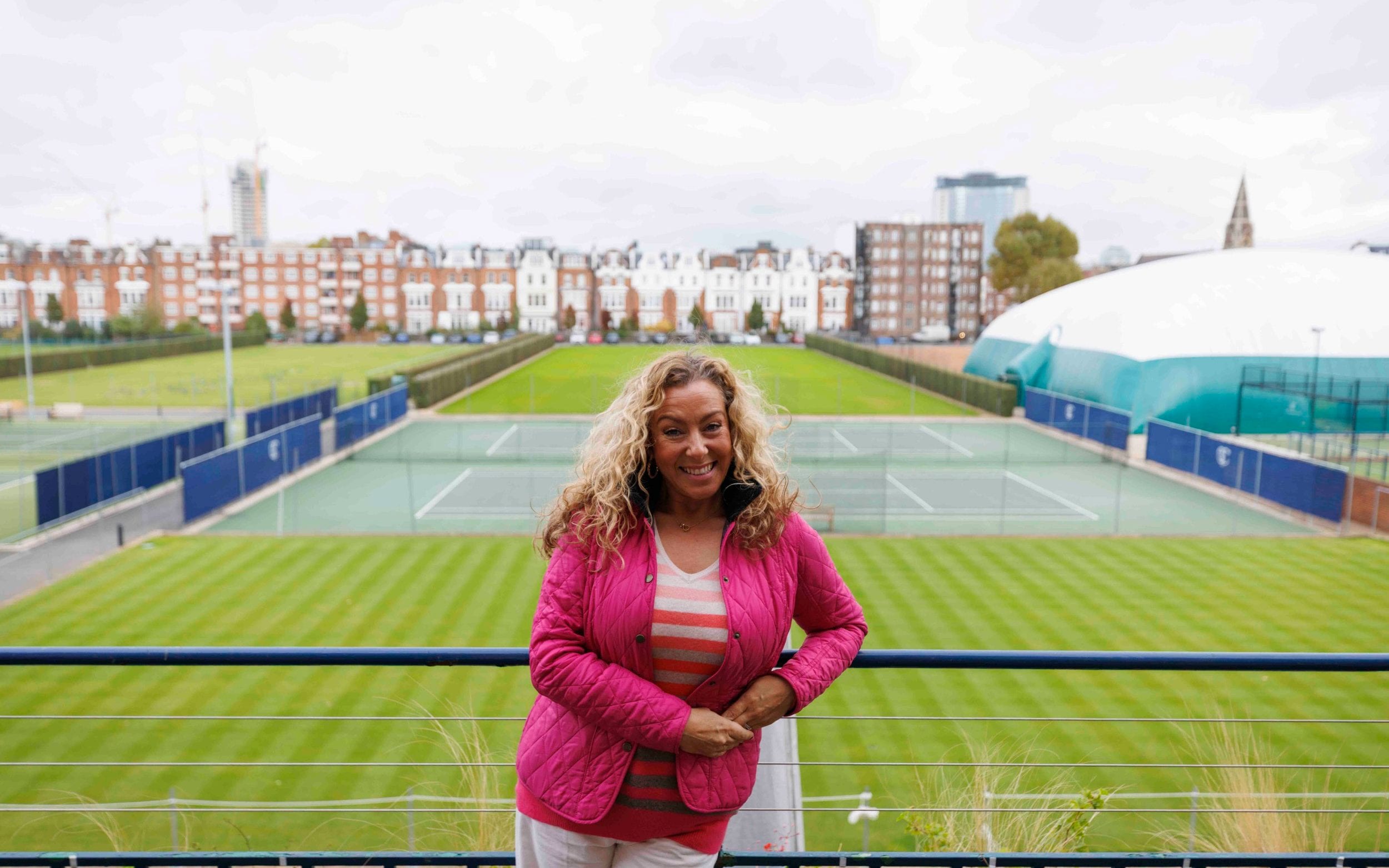
This week, Telegraph Sport ventured down to Queen’s Club in west London for an experimental hit – and came away exhausted on both a mental and physical level. The rules are so arcane that, for many beginners, it is easier to win a point than it is to work out the resulting score.
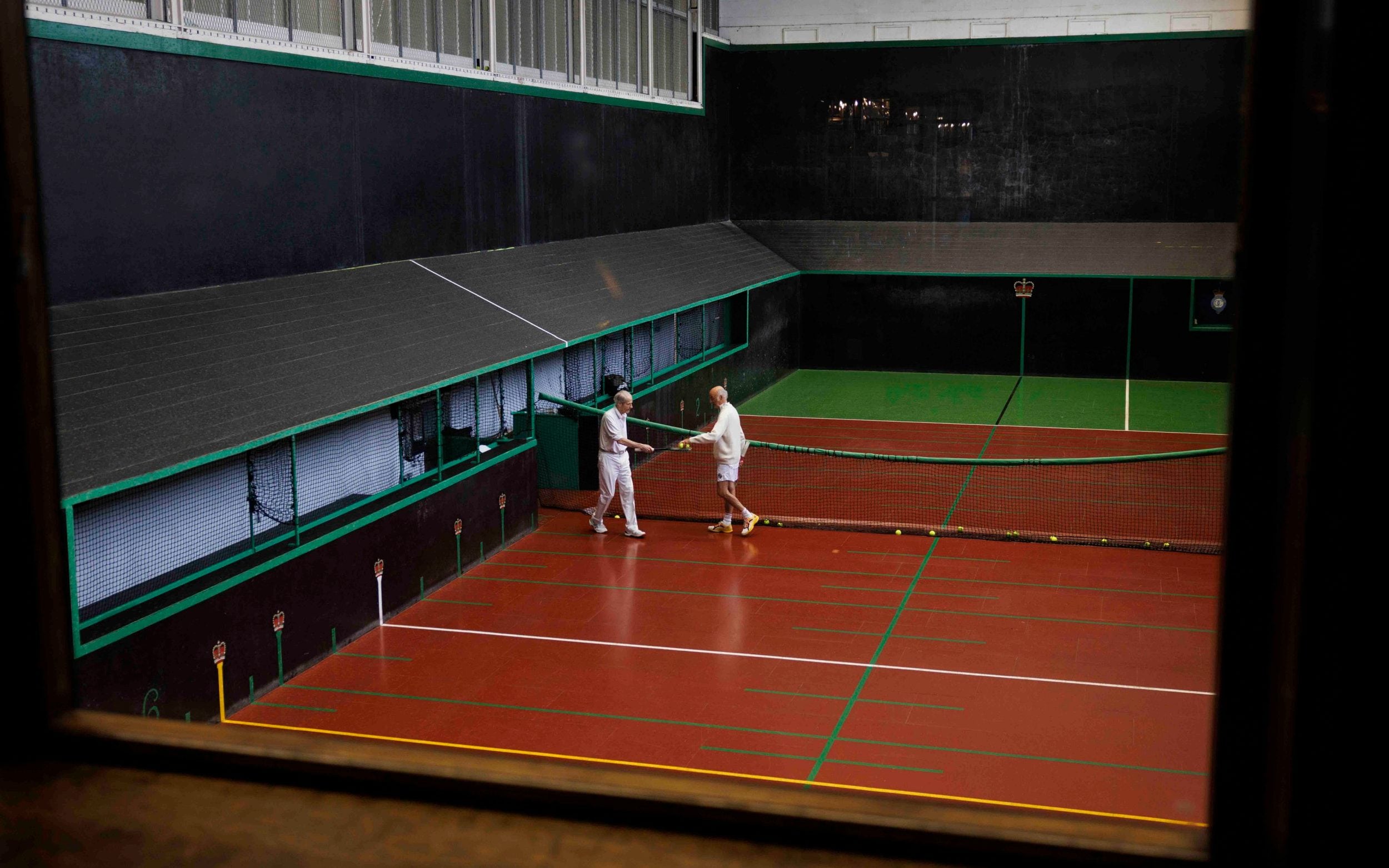
Played on a curious wooden stage featuring a series of netted “galleries”, a square target called a grille, and a buttress sticking out of one of the walls, this could be simultaneously the world’s oldest codified sport and its most complicated.
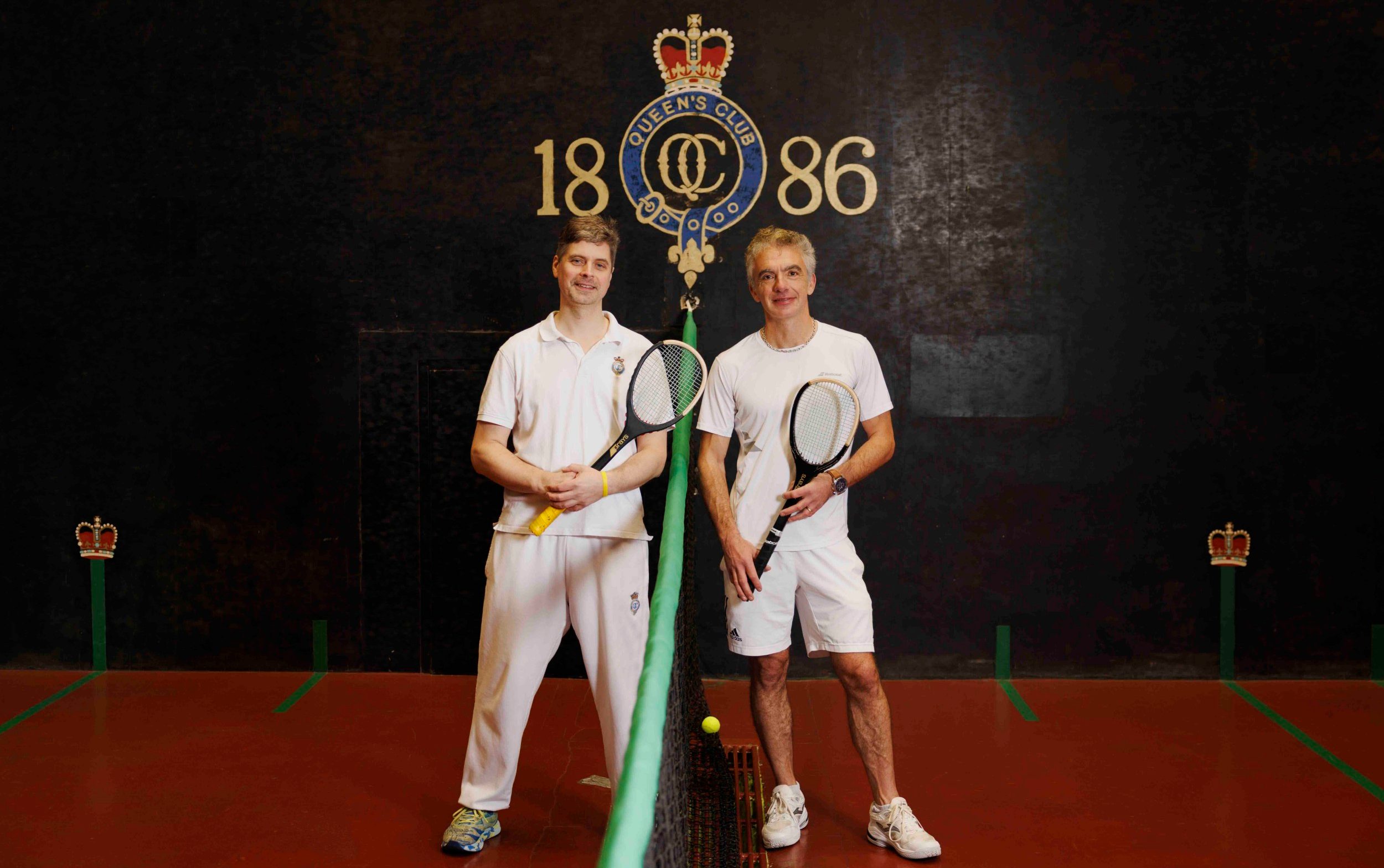
There are certain ways to win a point (or “rest”) instantly. Such as by hitting the ball into the grille, or at the “dedans” (the large netted window behind the server where spectators tend to gather).
But there are other, more complicated paths to victory; so many, in fact, that my instructor, Ben Ronaldson, the Queen’s head professional, apologetically admits that in real tennis there is an exception to every rule.
For instance, players do not take turns to serve, as in the lawn variety. Instead, the receiver can challenge for the right to serve by “laying a chase”, which means making the ball bounce twice before your opponent can hit it.
If you do get the chance to serve, there are perhaps a dozen different styles, all with exotic names such as the giraffe, the boomerang, or the underarm twist. As Roman Krznaric writes in his entertaining book The First Beautiful Game: “The service in lawn tennis resembles the conversational opener, ‘How are you?’ … predictable [and] boring.” Whereas the first line in real tennis can take you down any number of unexpected paths.
During our taster session at Queen’s, Ronaldson – a member of another sporting dynasty whose father Chris ruled real tennis for six years in the 1980s – shows me his “African dog” serve, so called because “it runs and runs”.
He tosses his cork-and-cloth ball into the air and swishes his racket in a manner approximating a conventional tennis serve. Rather than fizzing directly over the net, though, he sends the ball climbing on to the sloping roof (or “penthouse”) on the left-hand edge of the court. It then gurgles along like a marble on a track, before dropping into the back corner and dying with barely a murmur.
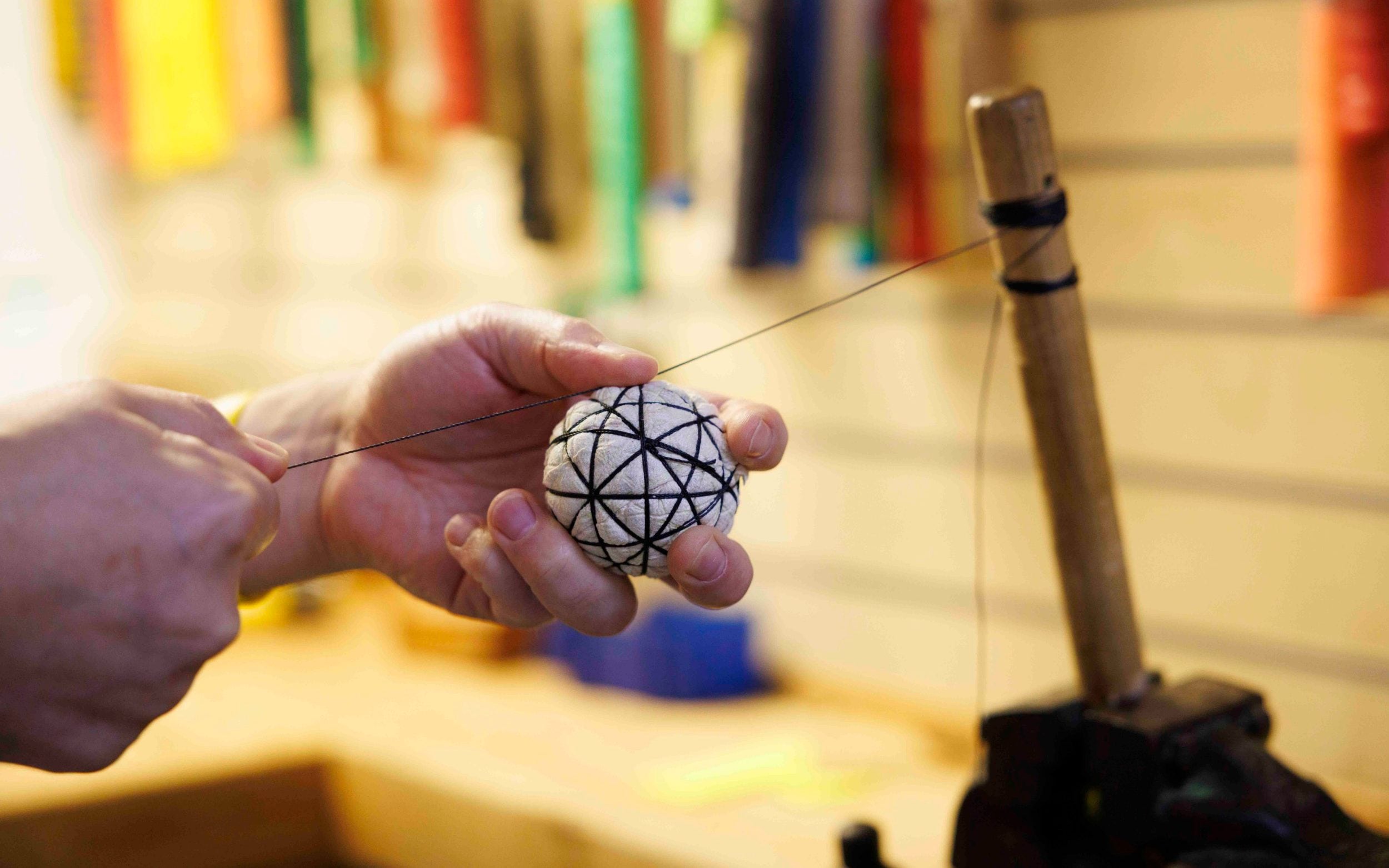
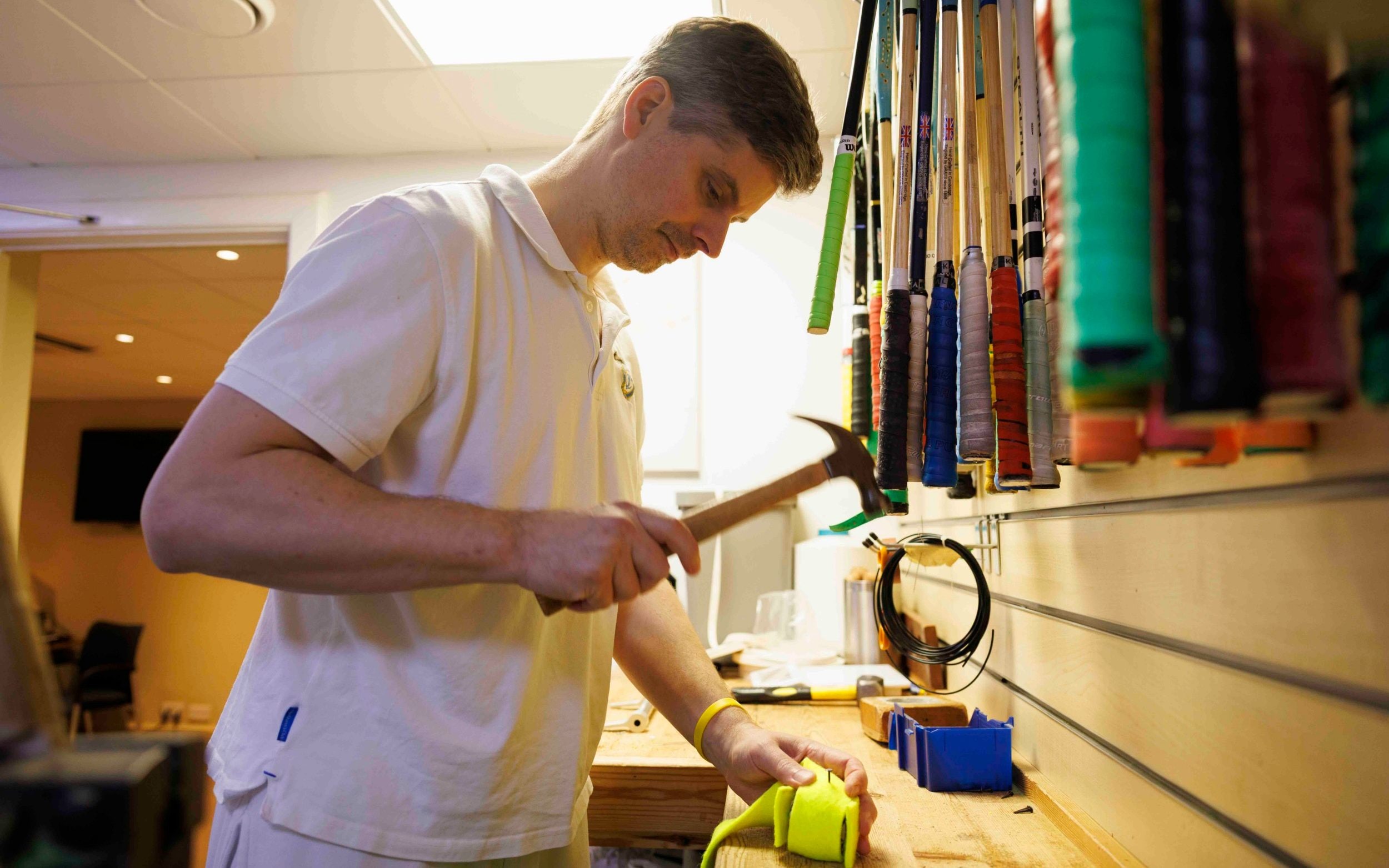
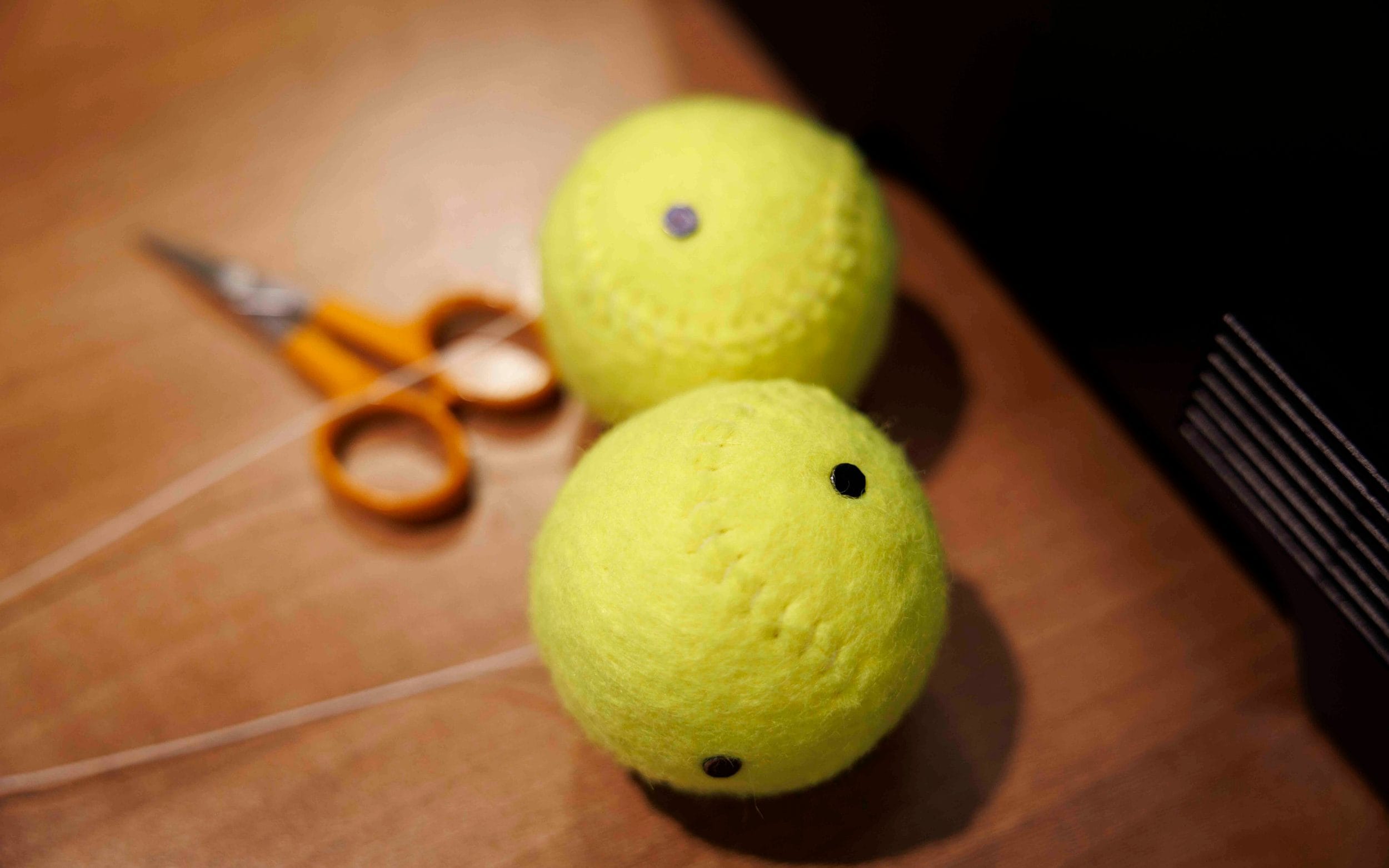
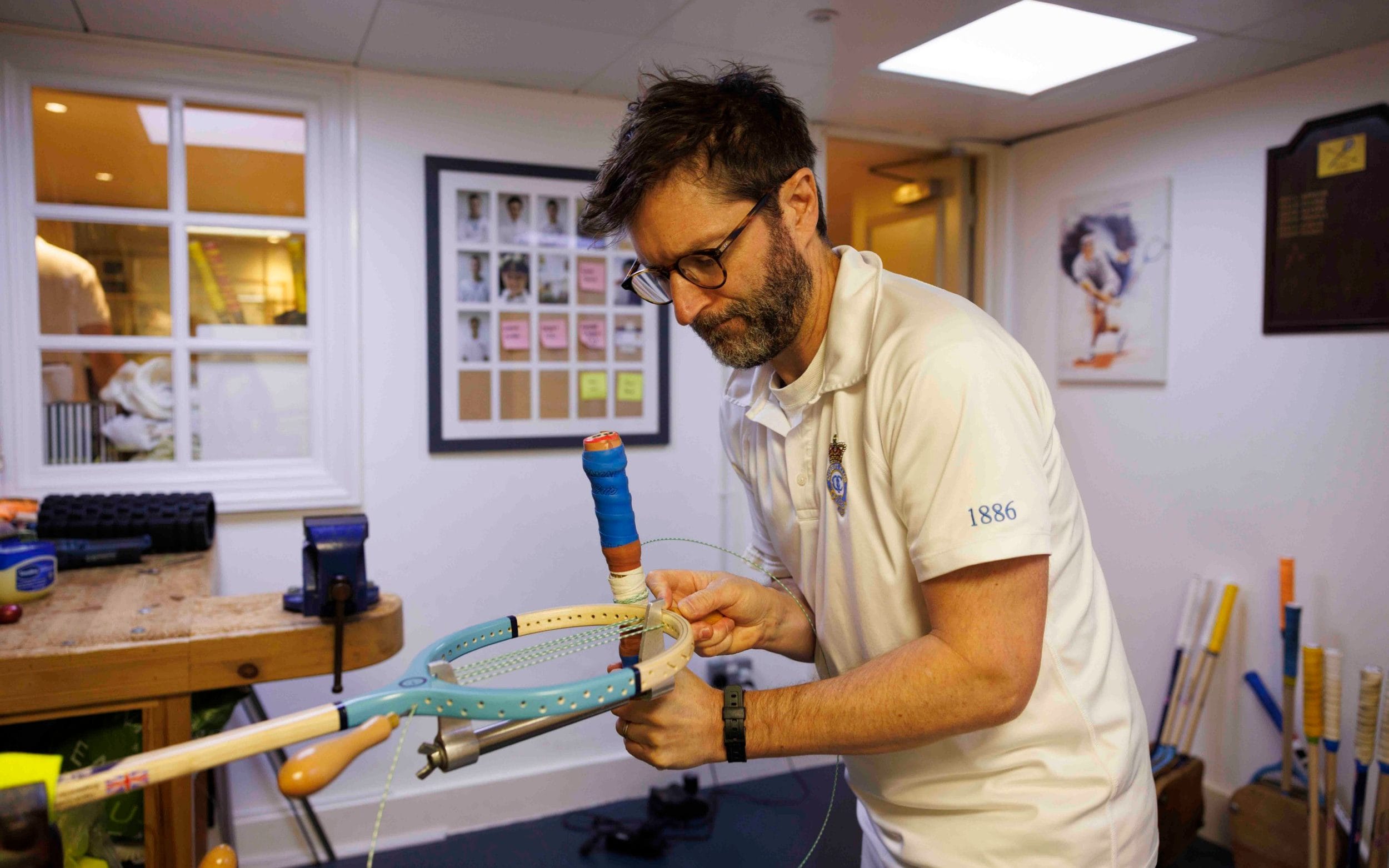
To bring further vagaries to this quirkiest of sports, the balls are hand-stitched, in a repetitive chore that Krznaric reckons occupies about a quarter of any given club professional’s time. These are not factory-made objects, but random-bounce generators which tend to sit down if they land on a seam, causing hackers like me to scream in silent fury.
I would make more noise, but real tennis has an elaborate code of etiquette, in which players must always pass each other at the net in a certain order. Also, the grand surroundings, which come freighted with centuries of tradition, tend to encourage restraint. As a chip off the old block, who never swears or throws his racket around, Henman regularly picks up good-behaviour awards.
As for those rackets, they are heavy, tightly strung, and tilt slightly off the straight, so that the shape of the head resembles a comma. This seems to be partly to honour the tradition of the original jeu de paume – because if we go back far enough, tennis was played with the hand – and partly because an off-centre sweet spot helps to scoop up low balls (which is most balls) via a sort of chopping motion.
Even the courts vary significantly. The basic layout, which derives from the cloisters of medieval France, allows for differences in the width of the floor and the penthouses, as well as the shape of the projecting buttress (or tambour).
And yet, despite all these anachronisms, real tennis is enjoying something of a revival. A new court opened in March in Sydney, Australia, at an estimated cost of a little over £1.5m. Meanwhile, current world champion Camden Riviere has been overseeing the construction of another in Charleston, South Carolina. When it opens in January, that will take the total number of courts to 45 worldwide.
Given the small catchment, it might seem vainglorious to celebrate the achievement of real-tennis champions with too much enthusiasm. But there are probably 70 or 80 professionals around the world, most attached to clubs and subsisting on relatively low incomes out of sheer love of the game. Many of these men (and, increasingly, women) train like absolute dervishes. As a result, top performers like Fahey, widely saluted as the “Roger Federer of real tennis”, have the aura, skill and fitness of world-class athletes.
Unsurprisingly, the player base skews towards the older side. Leaving aside the traditional nature of the game, experience teaches you to predict the complex passage of a ball around the various roofs and galleries and so favours a retiree with two false hips over an eager young debutant.
Plus, there is also a handicap system, which is thought to date back to the Tudors and beyond. The real-tennis influencer Lucy Fisher-Jenkins – who posts on TikTok and Instagram under the handle of Lady Chiswick – told me that during a Queen’s event last weekend, her experienced husband Corin started with a seven-point deficit in each game, and was also banned from hitting the ball into the tambour, or using certain “chases”.
Having attracted 20,000 followers on social media with her real-tennis videos, Lady Chiswick is reaching out to a new and younger demographic. Meanwhile, Henman hopes that the rise of padel could funnel a few more bodies towards this ur-sport – a game that Henry VIII once relished playing at his palace in Hampton Court. That court still endures, along with others at Lord’s Cricket Ground, Hatfield House and Falkland Palace in Perthshire.
“If you think that all racket sports come back to real tennis, then padel, which is very accessible, could encourage people to try it out,” Henman said. “Especially if they’re interested in the history of sport. Real tennis is actually closer to padel than it is to lawn tennis, because of the use of the walls, and in fact we’re building four padel courts at the Oratory.”
Henman hit his first real-tennis shot as a eight-year-old, under the aegis of father Mike, who now ranks among the leading over-50s in the country. If you leave aside the forest of rules and insider jargon for a second, there is something very moreish about the “zzzing” created by catching that heavy, low-bouncing cloth-and-cork ball in the racket’s sweet spot, and he has been hooked ever since. Like many devotees, Henman insists that it is not only the sport of kings, but the king of sports as well.
One man, however, who remains unmoved by the game is Henry’s uncle. “I’ve played about a dozen times and it’s far too difficult!” Tim told Telegraph Sport, before observing that, while volleys are an important part of the game, net play is fairly limited, in singles at least. “You wouldn’t want to get hit by that ball either,” he added. For now, at least, the original Henman is sticking to golf.
O que achou dessa notícia? Deixe um comentário abaixo e/ou compartilhe em suas redes sociais. Assim conseguiremos informar mais pessoas sobre o que acontece no mundo do tênis!
Convidamos você a clicar em Página de Parceiros para conhecer os parceiros do Tênis Portal e acessar seus sites.
Esta notícia foi originalmente publicada em: Fonte original